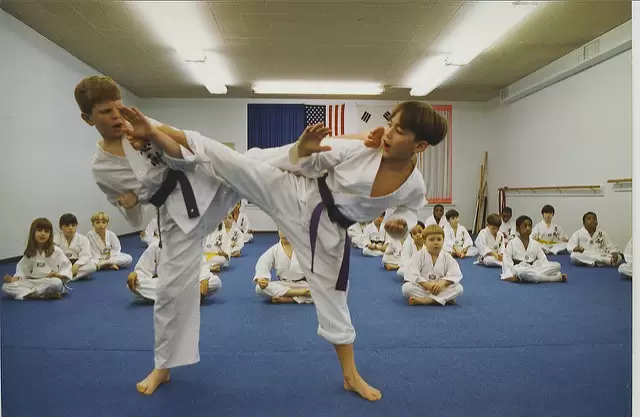

Deciding to enroll in martial arts classes can be exciting, intimidating, and full of promise. Trying to get in shape, practicing self-defense, becoming more disciplined, or just giving something new to try, but starting at an excellent martial art school is the only difference. This manual will be an informative guide on the path you are going through, what school to take, and how to maximize the term of your first year.
What You Should Expect Your First Trimester.

The beginning of martial arts both presents physical and mental difficulties. Juvenile classes usually begin with simple etiquette: bowing, instructors listening and warming up, learning stances, footwork, blocks, finding simple strikes or forms. It is not necessary to worry about speed or perfection. Martial art schools know beginners need time to build up strength, flexibility, and coordination.
It will affect your muscles that you have never used before, which will probably make them feel tired because martial arts works on maintaining all your core, your legs, back, and you will use your arms also. Whatisdue soreness beкойewicle, make stalk a Floweth. As well, anticipate focus on discipline, safety and respect between classmates.
Choosing the Right School
When you search for “martial arts classes near me,” you’ll find many options. The choice of a correct martial art school does not merely include the aspect of proximity. Here’s what to look for:
Style & Focus
Choose the attraction: Do you not prefer impressive art such as karate, taekwondo or Muay Thai? Or wrestling, such as judo, Brazilian jiu-jitsu? Perhaps this is because defense-oriented systems or mixed martial arts suit me better. The style will have an impact on your physical workouts, and your attitude as well as the class order.
Teacher Qualifications & Classroom Setting.
Insist on qualified, experienced, tolerant novices, careful as to the safety of the teacher. This is best done in a constructive, inclusive and supportive atmosphere, particularly the early years. There are schools, which have beginner classes; there are also schools that combine beginners and special students. \mt craft with them so, And whatever fits Becomes wonted as certain as sweet, And true, and agreeing as first.
Trial Class & Observation
Most martial art schools offer free or low-cost trials. Visit on a drop-in basis or watch one, or even sit in on a beginning session. This will help get a feel of pace, discipline, the interaction of peers and the school atmosphere is cohesive to what you desire.
Schedule & Cost
Times of check classes, frequency, membership fees, uniforms, belt guides and minimum commitment. Be specific: you will go further when scheduling works, and inflation of costs when you have already started can demoralize you.
Preparation to open and Improvements.
Physical Preparation
Begin with simple fitness: stretching, a quick workout, core muscle strength. The ability to remain flexible and strong adjusts you quicker.
Probably buy easy exercise outfits. Later uniform or belt will be the counsel of the school.
Make sure that you are healthy and have been cleared by a doctor in case you have prevailing health conditions.
Mental and Attitude Preparation.
Be good-natured and long-suffering. Progress takes time.
Arrive at the acknowledgement that error is a component of learning. Do not judge yourself against other people.
Stick to routine: practicing on a regular basis will be very effective as compared to an infrequent intense practice.
Probable Problems and How to solve them.
Fatigue and soreness – during rest days, hydrate and make your body rest.
Feeling behind – first few classes will probably get you. It is all about basics, not slowness.
Plateaus – once a few well known tricks and you can hit a plateau. That’s normal. Get feedback, train outside of the classroom or change up your training.
Fear/hesitation- sparring / partner work may be a frightener. Progress gradually. Wear protective equipment; liaise with your dentist or lecturer.
If You want the Most out of Your First Months.
Homework: do basic gestures, stretches or forms.
Schedule little accomplishments (go to classes twice a week, learn the fundamentals of forms, get better at balance or posture).
Establish a community: be engaged in classrooms and get to know your fellow students and how to learn with them.
Be consistent: be at the sessions, build momentum.
Final Thoughts
Starting martial arts classes is a rewarding path for health, self-confidence, and personal growth. Choosing the right martial art schools, preparing both body and mind, and embracing beginner-level patience are all part of the journey. Keep in mind, martial arts do not connect to being perfect, that is all progress, discipline and fun with every step of doing that. Still, with curiosity, commitment, and no closed mind you start with, you are likely to find, in addition to all the positive aspects, new strengths that you never imagined, and things that are far more beneficial, and of benefit way outside the dojo.